HOW TO LIVE, or, A LIFE OF MONTAIGNE ...

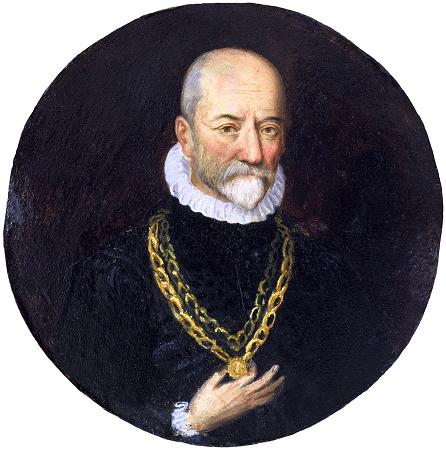
Montaigne portrait
Anonymous portrait (ca. 1590)


Why write about Montaigne?

One answer is that he is one of the most appealing, likeable writers ever to have lived. Another is that he helped make us the way we are.  Had he not existed, or had his own life gone slightly differently, we too would be a little bit different.  Here is an example of what I mean.

Among the internet’s many adventurous and idealistic projects is one called the Oxford Muse.  This encourages people to write brief self-portraits describing their lives, experiences, attitudes and values, with the aim of establishing  lines of communication with others all over the world.  The result is a database full of little essays with titles like: 

Why an educated Russian works as a cleaner in Oxford.
Why being a hairdresser satisfies the need for perfection.
How writing a self-portrait shows you are not who you thought you were.
What you can discover if you do not drink or dance.
What a person adds when writing about himself to what he says in conversation.
How a chef expresses his kindness.

In a newspaper article, the project’s founder Theodore Zeldin asked, “How do we go about establishing trust between nations?”, and answered: “In the same way as we do between individuals: through more honest self-revelation.”  For him, “the great adventure of our time is to discover who inhabits the world, one individual at a time”.

This idea - that immersion in one’s inner world can be a sociable act, and that the assertion of what makes us unlike anyone else can bring out the humanity we share with everyone else - is something we owe to Michel de Montaigne.  Living from 1533 to 1592, in a France dominated by bloody and miserable civil war, he maintained as private a life as possible while writing a hundred or so lively, revealing pieces which he called essais, or “tries” - a term he was the first to use in this context.  He meant them not as pedantic treatises, but as attempts or experiments upon himself.  Here are some of his titles:

By diverse means we arrive at the same end.
Our feelings reach out beyond us.
Of friendship.
Of cannibals.
Of the custom of wearing clothes.
How we cry and laugh for the same thing.
How our mind hinders itself.
Of diversion.
Of coaches.
Of experience.

Some essays fill just a page or two, others are much longer; the whole collection runs to more than a thousand pages.  They create a frank self-portrait which is also a mirror, for Montaigne believed that “each man bears the entire form of the human condition,” and that by opening his own mind to view he could show us ours as well.

He does this by telling us very ordinary things: that he never sleeps in the daytime and only enjoys sex lying down, that he is fond of eating fish, and that his ears often get itchy inside.  Once, he liked radishes, but he went off them; then he mysteriously went back to liking them again. 

radishes“I have a strong, thick-set body,” he says, “a face not fat but full, a temperament between the jovial and the melancholy”, and he quotes Martial: “My legs are stiff with bristles, my chest with shaggy hair”.   He admits many failures: he cannot sing or play musical instruments, and the only sport he excels in is horseriding, which he loves.  His memory is hopeless.  If a thought occurs to him that he wants to write down, he has to tell someone else at once in case he forgets it before he can walk to the room where his paper is kept.

Each reader of Montaigne recognizes some things and not others - perhaps the memory problem but not the fluctuating taste for radishes; perhaps the tin ears but not the itching ones.  Our response to the details doesn’t really matter: it is the vividness of them that makes an impression, and the feeling of meeting an individual as real and quirky as ourselves.

On the simplest level, Montaigne has the same appeal as reality TV shows.  We are curious apes, so we find the nitty-gritty of other people’s lives irresistible.  But he also touches deeper sources of empathy.  He talks about feelings that are hard to express or even to notice: about the experience of being lazy, or brave, or indecisive; about lying, about living up to one’s responsibilities, about obsessive fears of death or illness, and the way they seem to recede as one’s level of actual misfortune rises.  He often describes the sheer pleasure of being alive - a sensation he has learned to enhance simply by paying close attention to it.

How to Live is an unorthodox biography of this fascinating and charming man. It relates the story of his life by way of the questions he posed and the answers he explored, tracing his bizarre upbringing (made to speak only Latin), his youthful career and sexual adventures, his travels, and his friendships with the scholar and poet Etienne de La Boétie and with his adopted "daughter", Marie de Gournay. At the same time, it is the story of his many readers, who, over the centuries, have found in Montaigne an inexhaustible source of possible answers to the question that concerned them as it does all of us - "How to live?"

© Sarah Bakewell


How to Live, or A life of Montaigne in one question and twenty attempts at an answer.

U.K. edition: Chatto & Windus 2010. ISBN: 978-0-701-17892-5

U.S. edition: Other Press 2010. ISBN: 978-1590514254

Click on one of the images below to buy from Amazon.com or Amazon.co.uk.

(The U.S. edition is not available until October 19, 2010, but is available for pre-order.)  


Reviewers are saying ...

"A marvellously confident and clear introduction to Montaigne ... a rare achievement. Sarah Bakewell deserves congratulations for opening Montaigne to new readers so very appealingly." David Sexton, The Evening Standard

"Splendidly conceived and exquisitely written ... enormously absorbing." James McConnachie, The Sunday Times

"An entertaining and well-researched book. .. a thorough account of a peculiar and vivid personality." Philip Hensher, The Spectator

"Bakewell writes with verve ... an intellectually lively treatment of a Renaissance giant and his world." Matthew Dennison, Daily Telegraph

"'How to Live' is a superb, spirited introduction to the master." Adam Thorpe, The Guardian

"It is ultimately his life-loving vivacity that she succeeds in communicating to her readers." Ruth Scurr, The Observer

"Her fluid structure beautifully reflects the freeform nature of Montaigne's candid meditations on his daily life, idleness, food and his cat." Claire Allfree, Metro

"The challenge to the biographer is to write about Montaigne’s life in its spirit, which is precisely what Sarah Bakewell has done." Julian Baggini, Financial Times

"If you know his work, How to Live will delight and illuminate. If you don't, the book stands splendidly alone ... In short, Montaigne has here the biography he deserves, and would have enjoyed its unconventional structure." Michael Bywater, The Independent

"Just occasionally, I stumble on a golden nugget so fascinating and well-written that I realise how lucky I am to be a reviewer. I'm so pleased to have chanced upon this inviting biography of Montaigne by Sarah Bakewell!" Trish Simpson-Davis, 'The Bookbag'


Read my 7-week Guardian series on Montaigne here.


To find out more about Montaigne, follow these links:

The Montaigne Studies journal runs a good site, with a selection of portraits and links.

This is the site for the French Société des amis de Montaigne.

The French text of the Essais is available online here.

The Essays in English, in a dated but serviceable translation by Cotton, can be found here at Project Gutenberg.

The most readable and comprehensive modern translation of the Essays, by Donald Frame, is available in Everyman: 

Two judicious selections by other translators are also available in paperback.


Back to top

Home Exhibitions Writing Courses Blog